we've all been vibe coding the wrong way
why is everybody trying to do what's been done before, only faster?
We are swimming in an endless deep blue sea of vibe coded apps. Trust me, I’ve checked.
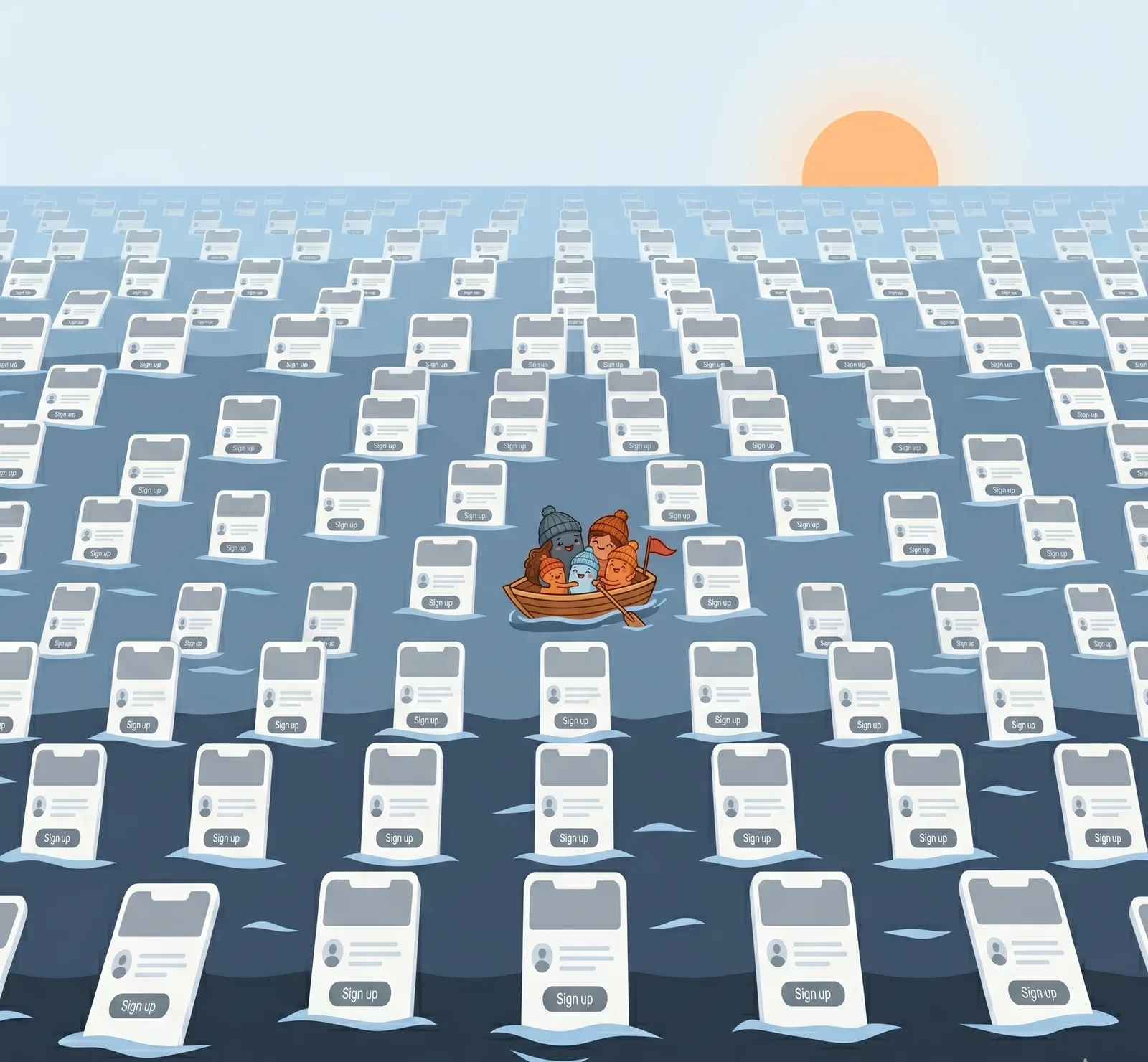
why does it sometimes feel like i’m on a beanie boat to nowhere?
Check out these stats:
- 13 of Product Hunt’s top 15 launches in 2025 were AI products
- A full 25% of Y Combinator’s latest batch shipped codebases that are ~95% AI-generated
- The top vibe-coding startups quadrupled to a combined $36B+ valuation in 2025
- Posts on reddit with the title “come check out my awesome new app” are up roughly 1 billion percent (Just a preliminary figure. Actual number may be higher.)
But also:
- Escape.tech scanned 5,600 vibe-coded apps and found 2,000+ vulnerabilities, 400+ exposed secrets, and 175 leaks of personal data
Millions have discovered vibe coding, which is amazing. What’s not so amazing is that, from what I can tell, a lot of these apps are still being built in the same old way.
Cloud-first, price-gated, freemium (yet still expensive), data harvested, and all that fun stuff. And, for good measure, full of security holes.
“Look at me, I can vibe-code an app into existence, build a complicated DB schema, throw in tons of shady forms and tables, give it any feature I can dream up, slap together a middling UI, and capture tons of valuable data that I can sell. All I need now is millions of unsuspecting users!”
It’s just that simple, right?
I’ve been building software since back in the days of manual, hand-cranked code. Which, to be fair, wasn’t actually that long ago. It just seems like a long time ago.
Even in the old days, the actual writing code portion of building a successful product was perhaps 20% of the work, and that’s always been the easy part. Vibe coding’s just made it easier - while introducing a bunch of new pitfalls.
The remaining 80%, by the way, never went away. AI hasn’t changed how you make successful software, it’s just made the coding part faster.

my kids are now begging me to play the vibe-coding pitfall game. if only they knew.
But why, in this new world of endless possibilities, are we still swimming in a sea of traditional apps?
Because that’s still where the big money is. Old habits die hard, and VCs continue to invest in the tried and true data models.
Software companies and VC-backed startups love the standard, DB-centric, data harvesting approach. This works great, because you have ACID-level consistency for all your data, avoiding conflicts and maximizing data retention. But we all know the real reason everybody loves this model - because those companies own your valuable data. And as any successful software CEO knows, that data is worth its weight in gold (if you have enough of it).
This way of thinking made perfect sense when there was a huge barrier to building software (well, make that working software). The company that did it best got the spoils - the benefit of capturing nearly the entire market, hoarding all that valuable user data, creating a beautifully consistent revenue stream.
Now, the world has changed. Building software is no longer the constraint.
Like the great composers of their day, builders can now create their own masterpieces. Unlike a symphony, though, apps will materially improve over time. You won’t see Beethoven’s Symphony No. 5.1 (R2) anytime soon, but a masterpiece of an app is constantly changing.

if AI had existed in beethoven’s time, we might be listening to symphony no. 10,000,000 (in d minor)
When I come across modern startups or vibe coded apps that follow the traditional model, my thought is always, “Why would anybody agree to these terms in the new world?”
Giving away your data has always been the trade-off you make for working with the market leader - the company that hired the best developers and built the best software. That trade-off no longer applies.
You can now choose where your data goes. And if you don’t want to give it to anybody, you can do that too. If you really want to, you can even build the software yourself. Who cares if it’s a bit janky - it works, doesn’t it?!
I predict the trade-off sacrifice of privacy in return for good software will simply fade away.
It’s no longer necessary to think along the lines of “How much data can I capture?” Simply focus on building the best damn product you can build.
Software like social networks, product aggregators, and the like will still retain their market domination, at least for a while. Those players have won their vertical already. But pure SaaS is anyone’s game. And that’s both exciting and scary as hell.
But greg, how do I make money?!
Glad you asked! Charge your users a reasonable price for your product, rather than selling their data. Call me old fashioned, but I believe customers are still willing to pay for a product that is genuinely useful, while still respecting their privacy.
We’re living in a brave new world, builders. Let’s get out and build in it.
(So to speak, of course. Us builders generally prefer to avoid direct sunlight.)
greg
What do you think about this new world being dominated by vibe coded apps? Let me know (or forget about that and just tell me what to build next) on our lovely beanies.family discord.
follow me on substack for a new beanstalk post every friday (well, usually)